

Elizabeth Samet’s Looking for the Good War headlines this week’s collection of new books on democracy. This week’s list features a diverse group including works on international relations, history, and philosophy. Moreover, each author approaches their subject from different perspectives. Nonetheless, the works contribute to different topics that involve debates surrounding democratic thought. Of course, don’t forget to check out the latest podcast from the Democracy Paradox where Joshua Yaffa discusses his book Between Two Fires.
Looking for the Good War


Elizabeth Samet is a professor of English at West Point. Her work has examined the way Americans think about war through literature and other cultural sources. Her latest book appears to examine the national mythology following World War II that has led to foreign commitments around the world. It looks like a fascinating read for anybody looking to make sense of the War in Afghanistan after America’s recent withdrawal.
Elizabeth D. Samet, Looking for the Good War: American Amnesia and the Violent Pursuit of Happiness

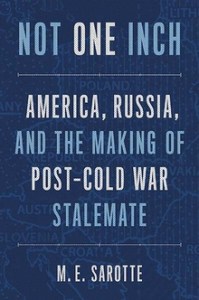
Not One Inch

Global Governance


Global Governance is an unlikely selection for this week because it appears to share some skepticism about liberal democracy. The book seems to offer a comparative analysis of different regime types with an emphasis on their ability to provide effective policy outcomes. The reason I get the impression Kolodziej is skeptical of liberal democracy is the second chapter in this book is titled, “The Fall of the Liberal Democratic Solution.” Moreover, it devotes three chapters to the Chinese Model without any obvious criticism. The final chapter appears to offer a solution that blends liberal democracy, China, and Russia into a “Modest Solution.” Those looking for challenges to liberal democracy may want to consider this slim volume from Routledge.
Edward A. Kolodziej, Global Governance: Evaluating the Liberal Democratic, Chinese, and Russian Solutions
African Political Thought


Islam, Justice, and Democracy


Indonesia is among the largest democracies in the world today. It is among a handful of examples that prove Islam is not antithetical to democracy. At the same time, many Islamic countries remain autocratic especially in the Middle East and North Africa. A new book from Sabri Ciftci examines the relationships between Islam, justice, and democracy. It’s an interesting find for anyone interested in the relationship between religion and democracy. Moreover, Muslims have a presence in many liberal democracies in Europe and the United States in greater numbers due to immigration. This volume offers some insights into the ways Islam fits into more modern conceptions of justice and democracy.
Sabri Ciftci, Islam, Justice, and Democracy
